Grates Cove · Newfoundland & Labrador
Five Centuries of Sea, Stone & Settlement
From John Cabot’s landfall to a National Historic Site — the story of one of Canada’s most unique outport communities.
Grates Cove sits at the northernmost tip of the Avalon Peninsula — a wind-swept, rocky headland so close to Europe that explorers and fishermen have been drawn to its shores for over five centuries. Called “the Grates” by John Guy as early as 1612, this small community carries one of the most extraordinary histories in Newfoundland.
The Cabot Legend
One of the First Points in North America Sighted by Europeans
Grates Cove holds a distinction — it is one of the closest points in North America to Europe, sitting approximately 2,575 kilometres from Ireland across the open Atlantic. This geography has led many historians to believe it was among the first places encountered by John Cabot on his 1497 voyage.
The legendary Cabot Rock, a large stone bearing inscriptions that some believed were carved by Cabot himself, stood as physical evidence of this connection for centuries. Though the rock has since disappeared, its monument remains a powerful symbol of Grates Cove’s place in the story of European exploration.
National Historic Site
The Walled Landscape
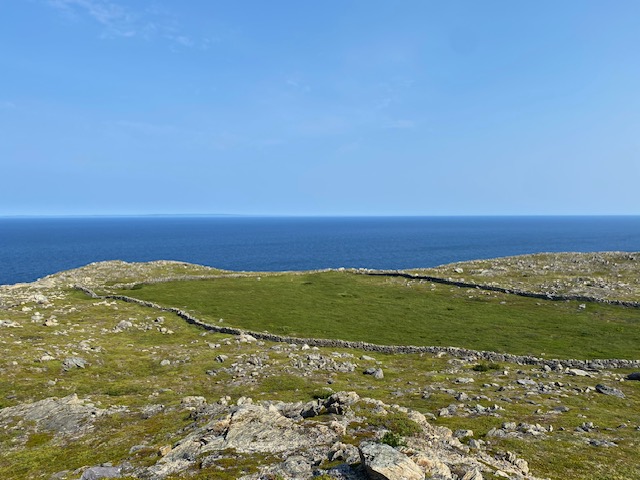
The stone walls of Grates Cove are unlike anything else in Canada. Built by early settlers who traced their roots to Ireland, these walls transformed a rocky, windswept landscape into productive gardens and livestock enclosures — a remarkable feat of community determination.
Irish Roots
The tradition of building dry-stone walls was brought to Grates Cove by settlers from Ireland, where similar walls have defined the landscape for thousands of years. The technique was adapted to Newfoundland's terrain and climate.
Scale & Scope
The walls cover over 150 acres of rocky terrain, making it one of the largest surviving examples of this type of communal land organization in all of North America. The walls set apart numerous fields from the common land.
Living Heritage
Designated a National Historic Site in 1995, the walls are maintained and celebrated today. Visitors can hike through the walled landscape on marked trails, experiencing this piece of living Newfoundland heritage.
A Place Like No Other
“Before the closing of the cod fishery, Grates Cove routinely brought in more cod per capita than any other Newfoundland community.”
— Historical record of Grates Cove fishery